





If you’re studying mathematics, you might be pleased to know that a vast proportion of history’s most notable mathematicians have in fact skipped higher education, with much of their accomplishments and great discoveries owing all credit to dedicated self-instruction and an innate passion for mathematics. Read on to learn more about their backgrounds and accomplishments.
1. Srinivasa Ramanujan
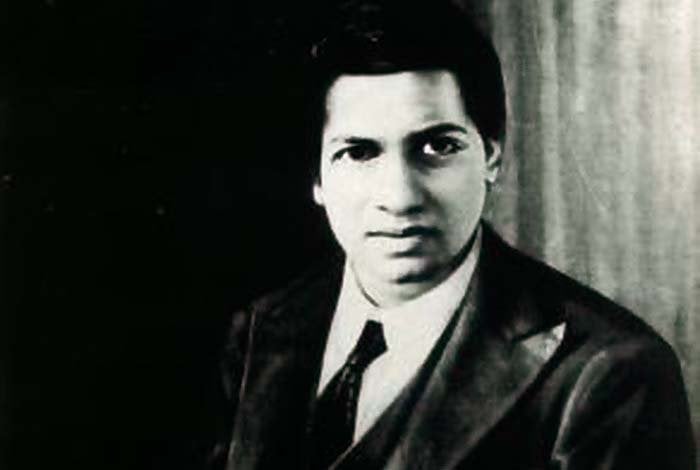
Born in British India (present-day Tamil Nadu, India) on December 22, 1887, Srinivasa Ramanujan was one of the world’s most renowned mathematicians of his time, having made notable contributions to various areas in mathematics, such as the elliptic functions, continued fractions, and infinite series, and left a particularly significant mark in the area of analytical theory of numbers.
From a young age, Ramanujan was evidently demonstrating an instinctive flare for numbers and mathematics, his first major inspirational flame ignited by a mathematical book he obtained at 15 years old. The teenager felt enthused to add more to the book’s collection of theorems, developing his own mathematical notions and formulas, and beginning a journey of discoveries that would eventually lead him onto a well-recognized stage of mathematical elites.
Despite his genius, Ramanujan was unemployed and suffered immense financial struggles throughout his short life. His innate mathematical abilities, however, were undoubtedly impressive, and following a correspondence with the British mathematician Godfrey H. Hardy, he was granted a scholarship from Trinity of College, Cambridge in the UK – though surprisingly, he didn’t major in mathematics, and graduated with a Bachelor of Science degree by research (now referred to as a PhD).#
2. Stefan Banach
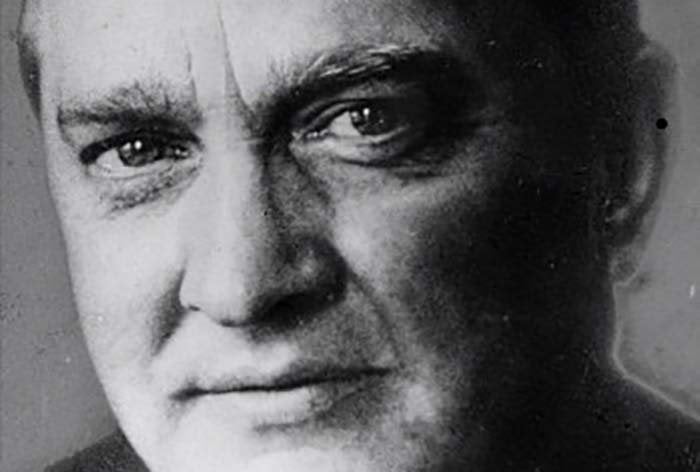
Considered to be one of the world’s most renowned mathematicians of the 20th century, Stefan Banach was the founder of modern functional analysis, and contributed to the development of the theory of topological vector spaces, as well as innovations in the theory of measure and integration. During his childhood, Banach was sent by his father to be raised by a family other than his own, though the pair continued to maintain a good relationship. He lived in decent financial stability and was encouraged to make use of his academic talents, which were recognized from an early age.
Following the end of World War I, Banach was granted an assistantship at the Lwow Polytechnic (now the Lviv Polytechnic National University) with the help of Professor Hugo Steinhaus, a fellow Polish mathematician whom he’d met two years prior. He managed to receive a doctorate without graduating from university.










Get closer to your dream programme
Your consent preferences have been set.
Time to start exploring.
Your account has been removed.
You can still browse the site or sign up again once you have parental consent.
Get closer to your dream programme